Εμφάνιση αναρτήσεων με ετικέτα SLEEP TIPS. Εμφάνιση όλων των αναρτήσεων

Παρασκευή 26 Απριλίου 2019

Child's Sleep


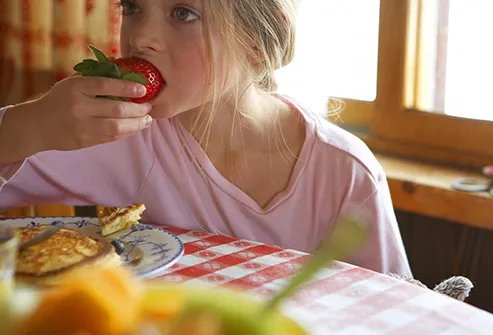
girl eating breakfast

Why Your Kid Needs Her ZZZs

It's not just to keep her from getting cranky! Little bodies need slumber to grow and stay healthy. Her muscles, including the heart, repair themselves during sleep. 
Sleep also controls the signals that tell your kid if she's hungry or full, which helps keep her at a good weight.

student writing in class

Sleep Boosts the Brain

While your kid's in dreamland, her brain stores memories from the day so she can recall them later. That's a key part of learning. 
Your child also needs sleep to help her pay attention in school. If she gets her shut-eye she'll get her work done faster and with fewer mistakes.
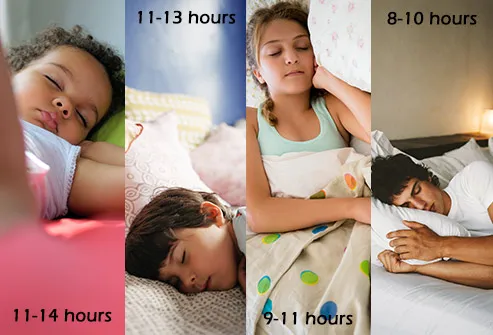
kids of different ages sleeping

How Much Sleep Does My Child Need?

Kids need more snooze-time than you do. Got a toddler? He should get 11 to 14 hours of total sleep in a day. Three- to 5-year-olds need a little less -- about 11 to 13 hours. If your child is 6 to 13, he should get 9 to 11 hours of ZZZs. Teens need 8 to 10 hours, but how much sleep they actually get is another story.
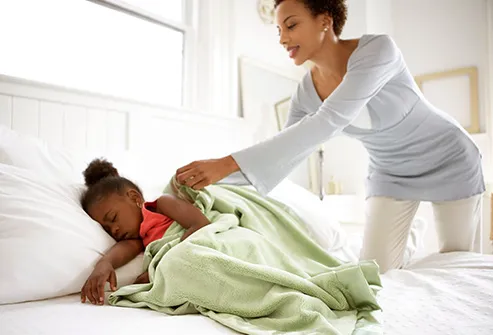
mom tucking daughter in for nap

Does My Child Need a Nap?

How much your kid snoozes during the day depends on how much she sleeps at night. 
Your toddler may get most of her 13 hours after the sun goes down, or she may get 8 after dark and make up the rest with naps. 
Most kids stop their daytime napping by age 5. If your child still does it at that age she might need an earlier bedtime. 
If your teen takes an afternoon siesta, it's a sure sign she's not getting enough sleep at night.

boy taking a bath

How Do I Get My Kid to Bed?

Bedtime doesn't have to be a battle! Stick to a routine, even on the weekends. It can include a soothing bath, brushing teeth, and going to the bathroom, but it should always end in the bedroom. 
Plan an enjoyable wind-down activity before sleep, such as reading by dim light. Make sure the bedroom is dark, cool, quiet, and screen-free. 
For problem sleepers, reserve the bed for shut-eye only -- no reading, homework, or playing games.
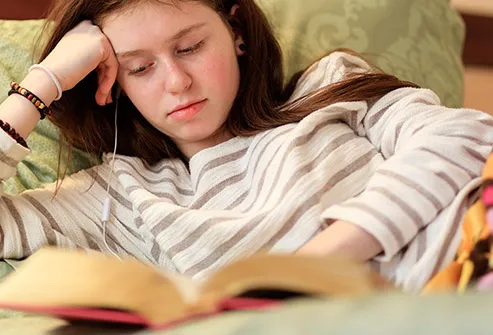
teen reading before bed

Can My Teen Get to Sleep on Time?

It's not "mission impossible," but let's face it, it's not easy either. Your teen's inner clock pushes her to go to bed late at night and sleep in the next morning. 
Dim the lights at night, whether she's ready for bed or not. Keep the bedroom cool. And though it sounds like a no-brainer, tell your teen to unplug -- turn off the TV, cell phone, and computer. 
On weekends, tell her not to sleep later than 2 hours past her weekday wake-up time.
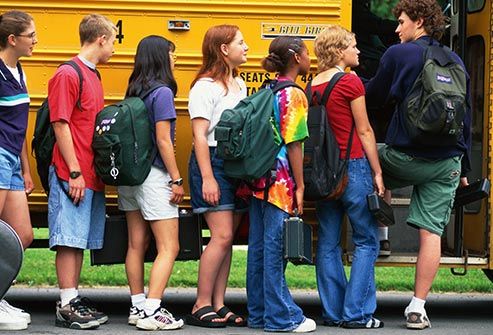
teens getting on school bus

Should School Start Later?

It's a controversial issue for schools and parents, and there's no easy solution. 
Many high school bells ring before 8 a.m. That makes it tough for teens to get enough sleep, since most don't hit the pillow before 11 p.m. 
A later start time might give kids an academic boost. Studies show teens who get the slumber they need have better grades and higher standardized test scores.
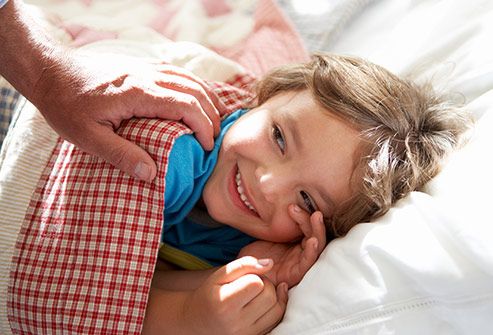
father waking son up in the morning

Does My Kid Sleep Enough?

You'll know your child gets regular rest if he can nod off 15 to 30 minutes after he goes to to bed at night. In the mornings, he'll wake up easily when it's time to get up. You won't have to go back to his room over and over to make sure he's out of bed. 
More signs he probably gets enough sleep: He doesn't snooze in school and doesn't need naps.
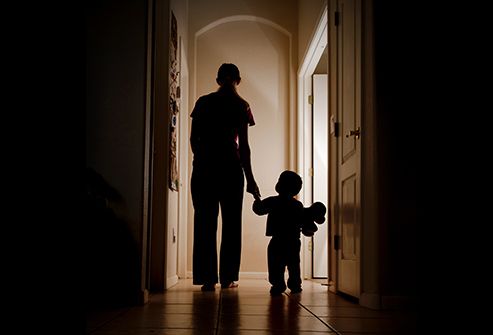
mom putting toddler to bed

Could It Be a Sleep Disorder?

Most of the time your kid's shut-eye woes are just part of growing up. But sometimes there's a medical condition that's behind the trouble. Watch for snoring, long pauses between breaths, or trouble breathing while he's asleep. He might need to be checked for sleep apnea. 
Sleepwalking, nightmares, or bed-wetting could also be signs of a sleep disorder. Check with your pediatrician to find out what you can do.

hyperactive boy sleeping


Is It ADHD or Not Enough Sleep?

Grown-ups and kids don't act the same when they miss out on sleep. You may slow down, but your child could start bouncing off the walls. This behavior may make it look like he's got ADHD. Your pediatrician can help you figure out what's going on. 
If your child does have ADHD, studies show getting the right amount of sleep can help him pay better attention and act less hyper.
S0URCE : WebMD

Δευτέρα 19 Μαρτίου 2018

ΠΩΣ Ο ΥΠΝΟΣ Ή Η ΕΛΛΕΙΨΗ ΤΟΥ ΕΠΗΡΕΑΖΕΙ ΤΟΝ ΟΡΓΑΝΙΣΜΟ- How Sleep or a Lack of Sleep Affects Your Body

 LEARN ABOUT SLEEP IN A MINUTE. WATCH THIS VIDEO
ΠΩΣ Ο ΥΠΝΟΣ Ή Η ΕΛΛΕΙΨΗ ΤΟΥ ΕΠΗΡΕΑΖΕΙ ΤΟΝ ΟΡΓΑΝΙΣΜΟ- How a Lack of Sleep Affects Your Body
Είναι σε όλους μας γνωστό ότι ο ύπνος παίζει σημαντικό ρόλο για την υγεία και την ευεξία του οργανισμού. Όμως πόσοι γνωρίζουμε ότι ο καλός ύπνος λειτουργεί προστατευτικά για την ψυχική και σωματική υγεία, την ποιότητα ζωής και την ασφάλειά μας;
Σύμφωνα με τους ειδικούς λοιπόν, ο ύπνος επηρεάζει θετικά τον τρόπο με τον οποίο σκεφτόμαστε, δουλεύουμε ,
αντιδρούμε,, μαθαίνουμε και κοινωνικοποιούμαστε.

Πιο συγκεκριμένα, ενώ κοιμόμαστε, ο εγκέφαλος μας προετοιμάζεται για την επόμενη μέρα και αποθηκεύει τις χρήσιμες πληροφορίες που λάβαμε την προηγούμενη. Σύμφωνα με μελέτες, μια νύχτα καλού ύπνου βελτιώνει τη μάθηση και ενισχύει τις δεξιότητες επίλυσης προβλημάτων, την προσοχή μας, τη λήψη αποφάσεων και τη δημιουργικότητά μας. Επίσης, ο ύπνος είναι απαραίτητος για την σωματική υγεία, καθώς εμπλέκεται στην επούλωση και επιδιόρθωση των αιμοφόρων αγγείων και της καρδιάς, διατηρεί την ισορροπία των ορμονών και συμβάλλει στην ανάπλαση των ιστών. Ειδικά για τους νέους, έχει σημασία ότι κατά τον ύπνο εκκρίνεται η αυξητική ορμόνη, απαραίτητη για την ανάπτυξη του οργανισμού, αύξηση του ύψους και την ενίσχυση της μυϊκής μάζας.
How a Lack of Sleep Affects Your Body
Being tired can impact your body in ways you’d never imagine.
You know that sleep is good for you. You also know that when you don’t get enough, you feel like a zombie. But there’s more going on when you don’t catch enough zzz’s than simply feeling tired. In fact, the ripple effects from shorting yourself on shut-eye reach almost every system in your body.
Stomach: On days following sleepless nights, you feel hungrier than usual and will crave high-fat, high-calorie foods.
Nose: Ah-choo! Your immune system goes downhill fast when you’re tired, meaning you’re likelier to catch a cold.
Eyes: Being tired does more than cause heavy eyelids. It can also cause you to feel more emotional, meaning tears are closer to the surface than normal.
Brain: When operating on little sleep, you’ll have a tougher time remembering things, feel less focused, and could even lose brain tissue. You might also suffer from slower reaction times, hallucinations, or even psychosis.
 Heart: Your risk for high blood pressure and heart disease goes up after a period where you aren’t sleeping well.
Skin: Sleep is important for regulating body temperature, so not getting enough can make you feel cold all over.

SOURCES : Sleep.org, NSF, ΕΠΕ etc

Παρασκευή 16 Μαρτίου 2018

What does healthy sleep look like? World Sleep Day® is March 15, 2019- ΠΑΓΚΟΣΜΙΑ ΗΜΕΡΑ ΥΠΝΟΥ 15 ΜΑΡΤΙΟΥ 2019


World Sleep Day® 
 March 15, 2019
          ΠΑΓΚΟΣΜΙΑ ΗΜΕΡΑ   ΥΠΝΟΥ
 15  ΜΑΡΤΙΟΥ 2019


What does healthy sleep look like?

Healthy sleep is sleep which restores and energizes a person, so he or she feels wide awake, dynamic and energetic all day long. Health and disease are opposites, and therefore, when disease (disorder) of sleep does exist, sleep investigation is worded to identify and treat it. Sleep disorders are not rare, and they can cause serious problems, if left untreated.
Πολλές έρευνες δείχνουν ότι ο κακής ποιότητας ή/και ανεπαρκούς διάρκειας ύπνος σχετίζεται με αρκετά προβλήματα υγείας όπως η παχυσαρκία, ο σακχαρώδης διαβήτης και η υπέρταση .Τα τελευταία χρόνια, παράλληλα με την αύξηση της συχνότητας εμφάνισης της παχυσαρκίας στην παιδική ηλικία, έχει παρατηρηθεί και μείωση στη διάρκεια του ύπνου των παιδιών.

Το γεγονός αυτό σε συνδυασμό με την επίδραση που φαίνεται πως έχει η διαδικασία του ύπνου στο οργανισμό (πχ. ορμονικό, νευρικό, ανοσοποιητικό σύστημα) έχουν ως αποτέλεσμα ο ανεπαρκής ύπνος να θεωρείται πιθανός παράγοντας κινδύνου για την ανάπτυξη παχυσαρκίας ήδη από την παιδική ηλικία.
Νέα μελέτη επιστημόνων από το Πανεπιστήμιο Βιρτζίνια Κόμονγουελθ, στη Βιρτζίνια των ΗΠΑ, επιβεβαιώνει τα παραπάνω, καθώς κατέληξε στο συμπέρασμα ότι τα παιδιά που δεν κοιμούνται επαρκώς, κινδυνεύουν στο μέλλον να γίνουν παχύσαρκα.
----------------------------------------
Important Things to Know About Caffeine, Food, Alcohol, Smoking and Sleep
• You should limit the amount of caffeine you eat or drink and avoid it for at least 4 hours before going to sleep.
• Caffeine may make it difficult to fall asleep and may also cause you to sleep more lightly.
• A healthy, balanced diet will improve your energy levels and sleep. Having meals at the same times each day will help keep your body clock stable.
• You should allow 2-3 hours between the last main meal of the day and going to bed. A small bedtime snack is fine.
• Avoid alcohol for at least 4 hours before going to bed. It will disrupt your sleep during the night.
• Nicotine is a stimulant that may make it more difficult to go to sleep and to stay asleep.
                                                                                          =============================
Ο επαρκής και ποιοτικός ύπνος θωρακίζει τον εγκέφαλο τώρα και στο μέλλον, δείχνει νέα επιστημονική μελέτη στην επιθεώρηση Sleep Medicine.
Από την άλλη, τυχόν προβλήματα ύπνου προμηνύουν τη νοητική έκπτωση αρκετές δεκαετίες μετά.

Τα προβλήματα ύπνου που επιβαρύνουν περισσότερο τον εγκέφαλο

Πολλές μελέτες έχουν δείξει ότι η έλλειψη ύπνου και οι δυσκολίες στον ύπνο επιβαρύνουν την εγκεφαλική λειτουργία. Η διαφορά της νέας μελέτης από άλλες του είδους της είναι ότι αποσαφηνίζει ποια συγκεκριμένα προβλήματα ύπνου είναι πιο βλαπτικά.
Από τα δεδομένα προέκυψε ότι προβλήματα όπως η αϋπνία οδηγούν σε χειρότερες επιδόσεις στα τεστ γνωστικής λειτουργίας μετά από μόλις 3 χρόνια, ενώ οι εφιάλτες στη μέση ηλικία οδήγησαν σε νοητική κατάπτωση σε βάθος 21 έως 31 ετών.

Προστασία του εγκεφάλου χάρη στη βελτίωση της ποιότητας του ύπνου

Για την αντιμετώπιση των προβλημάτων ύπνου –και ενδεχομένως για τη μείωση του κινδύνου νοητικής έκπτωσης με την πάροδο των ετών– προτείνονται ποικίλες θεραπευτικές λύσεις, όπως τα φάρμακα, η γνωσιακή συμπεριφοριστική θεραπεία αλλά και αλλαγές στις καθημερινές συνήθειες όπως η μείωση της κατανάλωσης αλκοόλ, η καλύτερη διατροφή και η τακτική γυμναστική.
ΑΥΠΝΙΑ
INSOMNIA
• Around 1 in 3 people have mild insomnia sometimes.
• Many poor sleepers have developed poor sleep habits.
• For specialist help, cognitive behavioural therapy for
insomnia is best.
• In the long run, taking sleeping pills isn't effective.
     ===============================================
Η αϋπνία και η προσπάθεια που καταβάλλει κάποιος να κοιμηθεί, μπορεί να γίνουν βασανιστικές. Αυτός είναι και ο λόγος που πολλοί άνθρωποι παίρνουν μελατονίνη σε χάπια ή σιρόπι .
Υπάρχει όμως κίνδυνος να πάρει κάποιος υπερβολική δόση μελατονίνης;
Τι  είναι η μελατονίνη: Πρόκειται για ορμόνη που παράγεται φυσικά στο σώμα  και βοηθά στον έλεγχο του κύκλου του ύπνου.
Τα χάπια μελατονίνης μπορούν να βοηθήσουν να σας πάρει ο ύπνος αλλά δεν εγγυώνται ότι θα έχετε συνεχή μη διακοπτόμενο ύπνο.
Επιπλέον, η υπερβολική δόση μελατονίνης μπορεί να επηρεάσει την ποιότητα του ύπνου.
=========================
Important Things to Know About Melatonin
• Melatonin is a hormone that is made by the pineal gland in the brain.
• You can also take it in pills.
• It is linked with how our body gets ready for sllep
• Some people say it has other benefits, but there is no proof for this.
• You can take it to help with some types of insomnia or to get over jet lag.
• You should talk with a doctor to work out when and how much to take.
Οι άνθρωποι καταστέλλουν την παραγωγή της πολύτιμης για τον ύπνο ορμόνης, όταν εκτίθενται την νύχτα σε τεχνητό φως.

Τετάρτη 14 Μαρτίου 2018

Tips to Help Your Baby Sleep Better


Sleep is a vital indicator of overall health and well-being. We spend up to one-third of our lives asleep, and the overall state of our "sleep health" remains an essential question throughout our lifespan.
Ten Tips to Help Your Baby Sleep Better
 1. Establish a regular sleep time . During the first weeks of life your baby does not yet have a set day-night rhythm. You can help create this rhythm by setting regular times for going to bed and waking up. These need to allow plenty of time for sleep. The more regular the hours, the stronger the sleep-wake cycle will be. This helps you predict when they need sleep. Regular hours are important for older children too. 
2 Night time is for sleep . You need to help your baby understand this. You do this by socialising as little as you can at night. Save stimulating social interaction for daylight and evening hours. Attend to your baby and feed in low light overnight. Also avoid rushing to the cot at the first sign of stirring. Your baby may well resettle if left for a moment or two.
3 A bedtime routine . Get into the habit of doing the same things before bed. This helps prepare your baby for sleep. It also helps him or her understand that the time has come for sleep. Simple things like a bath, some quiet time including reading to your baby, a final feed and a kiss can be part of this routine.
 4 Get your child used to being put into bed awake .This helps your baby learn to fall to sleep without your help. It's best for your baby to be sleepy and relaxed when they are placed in the cot. You don't need to wait for your child to be asleep before putting him or her to bed. 
5. Daytime naps. Babies and young children need a lot of sleep. They will need daytime naps. Get into a routine with these as much as you can. 
6 Keep it simple. Don’t go over the top to get your baby to sleep. Rocking, pushing your baby around in a stroller and other things may help at first. But the risk is that your baby will learn to need these things to sleep. If this happens, they won’t go to sleep without them. From the start, take steps to help your baby learn to sleep alone. Don't rely on external aids. 

7 Be consistent .Your baby will learn good sleep habits if you take a consistent approach. You may find it quite tough at first, but there will be long term rewards for you and your baby.
 8 The family bed .Think about whether you really want your baby to sleep in your bed. While some parents prefer this sooner or later the infant will need to move out. You might then find that it is hard to break the habit. Babies sleeping in the parents’ bed has also been linked to a higher risk of sudden infant death syndrome in some cases. If you do choose to have your baby sleep in bed with you, make sure you position your baby with care. You don’t want them covered by bedclothes or too hot. Also think about where you and your partner sleep so that you don’t roll onto your baby by accident.
9 Posture in bed . Babies sleeping on their tummies has been linked to sudden infant death syndrome. The safest position for your baby is on their back, face up. 
10.Time for you . Young parenthood is greatly rewarding and exciting. But it can be a very tiring and demanding time for you. Make sure you have plenty of downtime too. When your baby is awake, you want to be able to enjoy the interaction. Use the time your baby is sleeping to rest. Arrange with your partner to have some time off. This will mean that you will be happier, brighter and better able to cope. Because of this, you will enjoy raising your baby more.

Source :Sleep Health Foundation , Sleep.org , WebMD

HOW MUCH SLEEP DO WE REALLY NEED?


Sleep is a vital indicator of overall health and well-being. We spend up to one-third of our lives asleep, and the overall state of our "sleep health" remains an essential question throughout our lifespan.
Most of us know that getting a good night’s sleep is important, but too few of us actually make those eight or so hours between the sheets a priority. For many of us with sleep debt, we’ve forgotten what “being really, truly rested” feels like.
To further complicate matters, stimulants like coffee and energy drinks, alarm clocks, and external lights—including those from electronic devices—interferes with our"circadian rhythm" or natural sleep/wake cycle.
Sleep needs vary across ages and are especially impacted by lifestyle and health. To determine how much sleep you need, it's important to assess not only where you fall on the "sleep needs spectrum," but also to examine what lifestyle factors are affecting the quality and quantity of your sleep such as work schedules and stress.
To get the sleep you need, you must look at the big picture.(NSF)
Good Sleep Habits
Important Things to Know About Good Sleep Habits 
• There are many things that can be done to have a better night’s sleep
 • It is not good to frequently change the times you go to bed and get up
 • The hour before going to bed should be used to wind down and do more relaxing things
 • Meals should be timed to avoid going to bed on a full stomach, but not hungry either
• If you are not asleep after 20 minutes in bed, go to another room until you feel tired again and then go back to bed
 • Many poor sleepers spend too long in bed 
• Don’t have things in the bedroom that distract you from sleep 
• Getting sunlight during the day will help you to sleep better at night
 • Most adults need 7-9 hours of sleep a day. This stays the same even in old age

 • Naps in the evening can make it hard to sleep at night .
Source : NSF, SHF, Sleep.org

How Much Sleep Do We Really Need?

Σάββατο 23 Δεκεμβρίου 2017

ΠΩΣ Η ΤΗΛΕΟΡΑΣΗ ΚΛΠ ΟΔΗΓΟΥΝ ΣΤΗΝ ΠΑΧΥΣΑΡΚΙΑ - HOW TV ,PC etc LEADS TO OBESITY

ΕΝΗΜΕΡΩΣΗ - BRIEFING

Childhood Obesity Climbing With Media Use, European Doctors Warn 

Children’s waistlines have been expanding in lock step with the amount of time they spend with televisions, computers, smartphones and tablets, European doctors say.In the past 25 years, obesity rates have climbed rapidly among European children and teens, according to a consensus statement from the European Academy of Pediatrics and the European Childhood Obesity Group published online November 22 in Acta Paediatrica.

Roughly one in five kids and teens in Europe are overweight or obese, according to a 2017 World Health Organization study, the authors note.Mass media has been shown to have a broad effect on children’s health and can affect them physiologically and have an impact on their socio-cultural functioning and psychological wellbeing.--------------

--- Even as children’s screen time rises, parents demonstrate little awareness about what their kids do online or how much time they spend with tablets, smartphones and computers.Food advertising is another problem, because it can convince kids to crave and demand more junk food and make them less likely to eat their fruits and veggies, the statement also notes. Kids also tend to consume a large portion of their daily calories while watching TV, when ads may influence their food choices.-----

-----Screen media before bedtime interfere with sleep quality and duration, and poor sleep contributes to obesity.Limit media time each day, no media in the bedroom and ensure the media children are exposed to is high quality,. ........

----Regarding social media, parents should have access to their children’s social media sites and monitor their children’s interaction with social media - that has benefits beyond promoting a healthy weight.”---
 Acta Paediatrica 2017.

  Media should work for you & work within your family values & parenting style. When media is used thoughtfully & appropriately, media can enhance daily life. But when used inappropriately or without thought, media can displace many important activities such as face-to-face interaction, family-time, outdoor-play, exercise, unplugged downtime & sleep. 

Ο χρόνος που τα παιδιά ξοδεύουν παρακολουθώντας τηλεόραση ή άλλα μέσα  φαίνεται πως οδηγεί στην παχυσαρκία. Αυτό οφείλεται στην μειωμένη φυσική δραστηριότητα αλλά και στην αυξημένη κατανάλωση τροφών κατά την παρακολούθηση.Επίσης οι διαφημίσεις που αφορούν τα λεγόμενα ''junk foods'' ,  μπορέι να οδηγήσει σε αυξημένες απαιτήσεις των παιδιών για τέτοιυ είδους τροφές και επακόλουθα στην αυξημένη κατανάλωση τους μέ όλα τα κακά επακόλουθα.Προβλήματα Υπνου και συμπεριφοράς μπορουν επίσης να παρουσιαστούν . Οι γονείς πρέπει να ελέγχουν τον χρόνο παρακολούθησης αλλά και την ποιότητα των προγραμμάτων που τα παιδιά τους παρακολουθούν.

Μειώστε τις ωρες παρακολούθησης τηλεόρασης και ενασχόλησης με άλλα μέσα. Είναι πολύ σημαντικό για τα παιδιά μας ! ΝΚ

https://www.facebook.com/Pediamed-119180935417811/


Κυριακή 22 Οκτωβρίου 2017

NAPS - ΥΠΝΟΣ


https://www.facebook.com/Pediamed-119180935417811/?ref=bookmarks
PEDIAMED -FACEBOOK PAGE  .

Image result for SLEEP
  • A short nap is usually recommended (20-30 minutes) for short-term alertness. This type of nap provides significant benefit for improved alertness and performance without leaving you feeling groggy or interfering with nighttime sleep.
  • Naps can restore alertness, enhance performance, and reduce mistakes and accidents. A study at NASA on sleepy military pilots and astronauts found that a 40-minute nap improved performance by 34% and alertness 100%.
  • Naps can increase alertness in the period directly following the nap and may extend alertness a few hours later in the day.
  • Scheduled napping has also been prescribed for those who are affected by narcolepsy.
  • Napping has psychological benefits. A nap can be a pleasant luxury, a mini-vacation. It can provide an easy way to get some relaxation and rejuvenation.
  •  Το Αμερικανικό Ίδρυμα για τον Ύπνο συνιστά ο μεσημεριανός/απογευματινός ύπνος να διαρκεί 20-30 λεπτά, ώστε να βελτιώνονται τα επίπεδα εγρήγορσης χωρίς όμως να χαλάει η διάθεσή μας.
  •  Ερευνητές από το Πανεπιστήμιο του Σάαρλαντ διαπίστωσαν ότι ακόμη και 45-60 λεπτάύπνου ενισχύουν έως και κατά πέντε φορές την ικανότητα ανάκτησης πληροφοριών.
  •  

Tips to Help Your Baby Sleep Better

Tips to Help Your Baby Sleep Better

Sleep is a vital indicator of overall health and well-being. We spend up to one-third of our lives asleep, and the overall state...