Εμφάνιση αναρτήσεων με ετικέτα ADRENALINE. Εμφάνιση όλων των αναρτήσεων

Πέμπτη 28 Μαρτίου 2019

Severe Allergies at School -- How to Be Prepare - ΑΛΛΕΡΓΙΑ ΚΑΙ ΣΧΟΛΕΙΟ

Το 25% των παιδιών στην Ευρώπη εμφανίζει κάποια αλλεργική πάθηση. Είναι λοιπόν πιθανόν, η πάθηση αυτή να εκδηλώσει τα συμπτώματά της, στο σχολικό περιβάλλον. Κατά τη διάρκεια της σχολικής χρονιάς 1 στα 10 παιδιά θα παρουσιάσει ασθματική κρίση, ενώ 4-7% των παιδιών παρουσιάζουν τροφική αλλεργία. Σοβαρές αντιδράσεις τροφικής αλλεργίας μπορεί να συμβούν για πρώτη φορά στο σχολείο,  με το 20% όλων των αλλεργικών τροφικών αντιδράσεων να συμβαίνει στο ίδιο περιβάλλον.

Τα αλλεργικά συμπτώματα που μπορεί να εμφανίσουν στο σχολείο μπορεί να είναι από πολύ ήπια, όπως,- περιστασιακά φτερνίσματα και φαγούρα στη μύτη, έως πολύ σοβαρά κα απειλητικά  για τη ζωή τους, όπως ασθματικές κρίσεις ή αναφυλακτικές αντιδράσεις. Τα 2/3 των σχολείων έχουν ένα τουλάχιστον παιδί σε κίνδυνο να εμφανίσει αναφυλαξία. Το 15% των παιδιών στην ηλικία των  14 ετών έχουν διαγνωστεί με 2 ή περισσότερες αλλεργικές νόσους, όπως άσθμα, έκζεμα, αλλεργική ρινίτιδα. Η συνύπαρξη άσθματος, αποτελεί παράγοντα κινδύνου για σοβαρότερες αντιδράσεις σε παιδιά με τροφική αλλεργία.
Οι αλλεργικές παθήσεις σε ένα παιδί σχολικής ηλικίας, τις περισσότερες φορές, αποτελούν πηγή γέννησης διαφόρων προβλημάτων για τον πάσχοντα στο απαιτητικό σχολικό περιβάλλον.
 Προετοιμαστείτε εγκαίρως!
Ενημερωθείτε σωστά, οργανώστε με τον γιατρό σας ένα γραπτό σχέδιο δράσης σε περίπτωση ανάγκης για το παιδί σας και επικοινωνήστε το πρόβλημά σας εγκαίρως στο σχολείο. Ασφαλές περιβάλλον στο σχολείο  σημαίνει θετική ψυχολογία και αυτοπεποίθηση παιδιών-γονέων-εκπαιδευτικών.

Teacher and Parent Discussing Childs Allergies

Set Up a Meeting at the School

When your child has serious allergies, work with her school. Meet with the principal, her teachers, and the clinic staff.  Find out if the school already has a policy to deal with food or other allergies. Then, make a plan to help her avoid triggers while still being able to fully take part. Don’t forget after-school programs and the school bus.

Anaphylaxis Action Plan in School

Develop an Anaphylaxis Action Plan

In an allergy emergency, seconds count. Every child with prescribed epinephrine should have an emergency plan. Make one with your child’s doctor and the school nurse. It should have your child’s photo, specific allergy warning signs and symptoms, and treatment instructions. Put copies in your child’s classroom, the office, and the cafeteria.
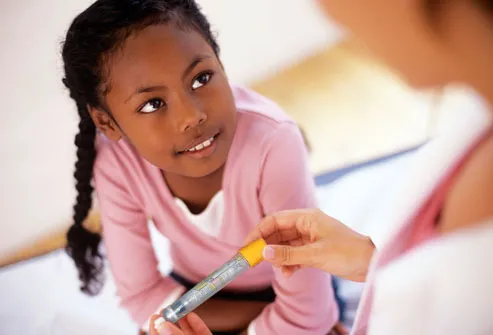
Teacher Securing Students Epinephrine

Supply the School With Medication

Epinephrine should be with your child at school -- not locked up or refrigerated. It should be passed between staff wherever she goes unless she’s old enough to carry it. Explain doctor instructions, which may include injecting at the first signs of anaphylaxis. Caution that they should not wait, even if it is unclear that the symptoms are allergy related. Your doctor may suggest that your child carry two doses. Check expiration dates often.

Children With Food Allergies

Talk to Your Child About Allergies

Go over your child’s triggers with her. For food allergies, tell her not to share food, utensils, or containers, and to wash her hands before and after eating. For insect sting allergies, teach her to wear long sleeves, pants, and shoes outside and eat inside when she can. If outside, use a straw. Then she can’t swallow a bee if it is in her drink. 
 Το παιδί με τροφική αλλεργία στο σχολείο
4-7% των παιδιών σχολικής ηλικίας παρουσιάζουν τροφική αλλεργία ( εξανθήματα σε όλο το σώμα, ‘πρηξίματα’, έμετοι, διάρροιες, κ.ά) και 20% των αντιδράσεων αυτών συμβαίνουν στο σχολικό περιβάλλον. Γάλα, αυγό, σιτηρά, ξηροί καρποί, ψάρι και θαλασσινά είναι τα συχνότερα τροφικά αλλεργιογόνα.
Επειδή δεν μπορεί να προβλεφθεί η βαρύτητα της αντίδρασης, οι εκπαιδευτικοί θα πρέπει να είναι εκπαιδευμένοι στην αναγνώριση  των συμπτωμάτων και την άμεση και σωστή αντιμετώπιση.
Το πρόβλημα βέβαια δεν είναι τόσο έντονο στη χώρα μας όσο σε χώρες με σχολικό εστιατόριο. Παρόλα αυτά, το πρόβλημα παραμένει υπαρκτό στους παιδικούς σταθμούς όπου καθημερινά προετοιμάζονται γεύματα και ταΐζονται μικρά παιδιά. Οι γονείς  μπορούν να έχουν άμεσο έλεγχο του κολατσιού που θα δώσουν στο παιδί, αλλά και να το συμβουλεύσουν για το τι μπορεί να αγοράσει από το κυλικείο.

Προστατεύω το παιδί με τροφική αλλεργία σημαίνει εκπαιδεύω  το παιδί και το περιβάλλον του, ώστε:

  • να κατανοήσει τη σοβαρότητα του προβλήματος,

  • να ενημερωθεί αναλυτικά  για τις τροφές στις οποίες έχει αλλεργία,

  • να διαβάζει τα συστατικά στις ετικέτες όλων των έτοιμων τροφών,

  • να μην ανταλλάσει και να μη μοιράζεται τρόφιμα με τους συμμαθητές,

  • να μη μαζεύει και να μην παίζει με υπολείμματα τροφών,

  • να πλένει πάντα τα χέρια του με σαπούνι,  πριν και μετά το φαγητό

  • Να ετοιμάζεται από την οικογένεια φαγητό από το σπίτι, όταν δεν είναι δυνατόν να καθορίζεται ακριβώς η σύσταση και τα περιεχόμενα των τροφίμων που παρέχονται από τα σχολικά κυλικεία.

boys eating in a cafeteria

Teach Warning Signs

Children and school staff (even substitute teachers and lunch monitors) should know to watch for these warning signs:
  • Hives and itching, pale or flushed skin
  • Swollen throat or tongue
  • Wheezing, trouble breathing or swallowing
  • Dizziness or fainting, or rapid or weak pulse
  • Vomiting, diarrhea, or stomach cramps
mother and daughter with doctor

Make a Response Plan

School staff should not expect your child to give herself an epinephrine shot during a reaction, even if she knows how. Your doctor will make an emergency response plan for staff to follow. It will tell them how and when to give epinephrine, call 911 (112), and start emergency first aid.

Painting With Allergy Safe Paint

Expose Hidden Severe Allergy Dangers

Ask your child's teacher to avoid using triggers in lesson plans, crafts projects, and cooking classes. Some iffy items include:
  • Tempera paints that have eggs
  • Clay or dough made with peanut butter
  • Icing made from egg whites
Also establish clear communication regarding class parties and events in which food items are brought in.  Request a list of ingredients prior to these events.  Then decide with your child if it's safer to pack her a treat from home.
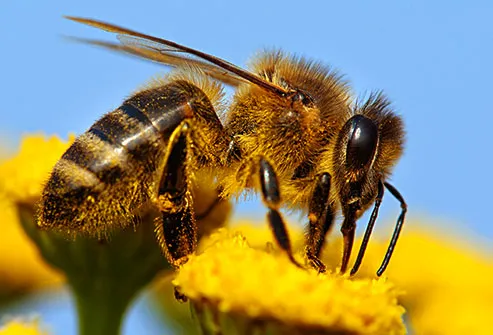
bee on flower

Work for Sting Prevention

Preventing insect stings can be hard. But your child's school can take these helpful steps:
  • Remove insect nests on or near school grounds
  • Store garbage in covered containers away from where students play or line up for school
  • Have at-risk students eat inside, at least during sting season
  •  
Αλλεργικές αντιδράσεις σε μέλισσα και σφήκα συμβαίνουν σπάνια στο σχολικό περιβάλλον. Παρόλα αυτά, επειδή μπορεί να αποτελέσει ένα πολύ επείγον πρόβλημα, θα πρέπει οι εκπαιδευτικοί να είναι ενημερωμένοι για την οντότητα αυτή και την αντιμετώπισή της. Πολύ σημαντική η εξοικίωση των εκπαιδευτικών με την αυτοενιέμενη ένεση αδρεναλίνης, αλλά και με τις οδηγίες για το πότε θα πρέπει να χορηγηθεί όπως και για τα υπόλοιπα φάρμακα αντιμετώπισης του οξέος επεισοδίου.
Τα παιδιά με γνωστή αλλεργία σε Υμενόπτερα θα πρέπει να τηρούν κάποιους κανόνες όταν βρίσκονται σε εξωτερικό περιβάλλον ( π.χ. στο προαύλιο του σχολείου, στην εκδρομή με το σχολείο):

  • να αποφεύγουν τα γλυκά και να μην πίνουν αναψυκτικά & χυμούς ( διότι οι γλυκαντικές ουσίες που περιέχουν προσελκύουν αυτά τα έντομα)  σε εξωτερικούς χώρους

  • να φορούν πάντα παπούτσια,

  • να μη φορούν ρούχα ανοιχτόχρωμα με έντονα χρώματα,

  • να μη χρησιμοποιούν αρώματα,

  • να αποφεύγουν τις συναθροίσεις κοντά σε πηγές, τρεχούμενα ή στάσιμα νερά, και κάδους σκουπιδιών,

  • να φέρουν πάντα μαζί τους το set αντιμετώπισης αναφυλαξίας και φυσικά μέσα σε αυτό την αυτοενιέμενη αδρεναλίνη και να ξέρουν να τη χρησιμοποιούν.

Allergy Medical Alert Bracelet

Give Your Child a Medical ID Bracelet

A medical alert bracelet reminds school staff during an emergency that your child needs epinephrine. It also gives paramedics a special number to get important information quickly. Bracelets designed for kids can feature beads or cartoon characters.

Children in School Lunch Line

Should You Bag Cafeteria Lunches?

If you’re sure your child won’t swap food, packing a lunch is OK. But schools must make meals for kids with special diet needs at no extra cost. Food staff should know your child’s food triggers and the technical and scientific names for those foods to help them when reading packages. Surfaces and utensils should be washed to avoid cross contact.

School Girls Eating in an Allergen Free Zone

No-Allergen Zones

Limiting contact with triggers can be done in a way that doesn't make kids with food allergies feel alone. If your child is allergic to nuts, for example, work with school staff to:
  • Have a special lunch table where anyone can sit whose lunch is nut-free
  • Make school-wide rules not to trade food or share utensils or straws
  • Create a nut-free snack policy in the classroom

Parent Helping Child at School

Help the School Help Your Child

By volunteering at school, you can help teachers watch what's going on. Be involved in planning and going on field trips and class parties. Write a letter that the teacher can send to other class parents to let them know about your child’s allergy. Offer to provide kid-friendly allergy info for classmates.
SOURCES:WebMD , allergikos.gr , AAP , ΕΠΕ 

Σάββατο 28 Απριλίου 2018

How Common Are Food Allergies? Food Allergy Facts and Figures


Food Allergy Facts and Figures

A food allergy occurs when the body’s immune system sees a certain food as harmful and reacts by causing symptoms. This is an allergic reaction. Foods that cause allergic reactions are called allergens.
Allergic reactions can involve the skin, mouth, eyes, lungs, heart, gut and brain. Mild and severe symptoms can lead to a serious allergic reaction called anaphylaxis (anna-fih-LACK-sis). This reaction usually involves more than one part of the body and can worsen quickly. Anaphylaxis must be treated right away to provide the best chance for improvement and prevent serious, potentially life-threatening complications.

How Common Are Food Allergies?

  • Food allergies are most common in young children.
  • Milk, egg, wheat and soy allergies are often outgrown. But most people do not outgrow peanut, tree nut, fish and shellfish allergies.
  • Food allergies affect approximately 4 to 6 percent of children in the U.S.
  • About 5.9 million (8%) of children have food allergies.
  • In 2015, 4.2 million children under 18 years of age had food allergies over the previous 12 months.
  • Children with food allergies are two to four times more likely to have asthma or other allergic disease.
  • Food allergies occur at a lower rate in Hispanic children at 3.6 percent. Food allergies in non-Hispanic white and non-Hispanic black children are greater than 5 percent.

What Are the Most Frequent Food Allergens?

  • Eight foods cause 90 percent of most food allergy reactions:
    • Milk
    • Egg
    • Peanut
    • Tree nut (e.g., almonds, walnut, pecans, cashews, pistachios)
    • Wheat
    • Soy
    • Fish (e.g., bass, flounder, cod)
    • Shellfish (e.g., crab, shrimp, scallop, clams)
Allergies to peanuts, tree nuts, fish and shellfish tend to persist lifelong. Allergies to milk, egg, wheat and soy often disappear with age, but not always.

What Is Anaphylaxis?

Anaphylaxis is a life-threatening allergic reaction.
  • Not all allergic reactions are anaphylactic.
  • Anaphylaxis can cause:
    • Tightening of the airways
    • Swelling of the throat
    • Severely low blood pressure
    • Shock6
  • Symptoms of a severe allergic reaction can include:
    • Skin: hives (often very itchy), flushed skin or rash
    • Mouth: swelling of the lips, tongue and throat; tingling or itchy feeling in the mouth
    • Lungs: shortness of breath, trouble breathing, coughing or wheezing
    • Heart: dizziness, lightheadedness
    • Stomach: vomiting, diarrhea
  • Food, latex, insect stings and medicines can cause a severe allergic reaction.
  • Each year in the U.S., it is estimated that severe reactions to food cause:
    • 30,000 emergency room visits
    • 2,000 hospitalizations
    • 150 deaths

How Are Food Allergies Managed and Treated?

  • There is currently no cure for food allergies.
  • Avoiding the allergen is the most important way to prevent a reaction.
  • Those with food allergies should carefully read food labels and always ask about ingredients before eating the food.
  • Epinephrine is the first line of treatment for anaphylaxis.
  • Those with food allergies should always have epinephrine auto-injectors on hand.
  • If a person is having anaphylaxis, they should:
Medical Review September 2017.
References

ΜΥΘΟΙ ΚΑΙ ΠΡΑΓΜΑΤΙΚΟΤΗΤΑ ΓΙΑ ΤΗΝ ΤΡΟΦΙΚΗ ΑΛΛΕΡΓΙΑ ΣΤΑ ΠΑΙΔΙΑ


* Μύθος: Η αλλεργία στο γάλα είναι το ίδιο επικίνδυνη με τη δυσανεξία στη λακτόζη.
Πραγματικότητα: Θα πρέπει να γίνει σαφής διαχωρισμός των δύο καταστάσεων. Η δυσανεξία στη λακτόζη, που είναι υδατάνθρακας, οφείλεται στο ότι ο ασθενής δεν μπορεί να διασπάσει εύκολα την
ουσία αυτή, με αποτέλεσμα την εμφάνιση κοιλιακών συμπτωμάτων παρόμοια με αυτά που νιώθουμε όταν ‘βαρυστομαχιάζουμε’. Σε κάθε περίπτωση, δεν υπάρχει οποιοσδήποτε σημαντικός κίνδυνος.
Αντίθετα, η αληθής αλλεργία στο γάλα οφείλεται σε ύπαρξη αντισωμάτων ή ειδικών κυττάρων, που αναγνωρίζουν τις πρωτεΐνες του γάλακτος, και θέτουν τον οργανισμό σε ‘πόλεμο’ όταν έρχονται σε επαφή με αυτές. Ενώ η δυσανεξία στη λακτόζη μπορεί να αντιμετωπιστεί με τροποποίηση της δίαιτας (προϊόντα ελεύθερα λακτόζης, κατανάλωση λιγότερου γάλακτος σε σχέση με τα υπόλοιπα γαλακτοκομικά) ή αναπλήρωση του υπεύθυνου ενζύμου με τη μορφή χαπιού, η αληθής αλλεργία στο γάλα απαιτεί καταρχήν απόλυτη και αυστηρή αποφυγή του αλλεργιογόνου σε κάθε μορφή (γάλα ή γαλακτοκομικά προϊόντα), ώστε να εξαλειφθεί ο κίνδυνος επικίνδυνης αντίδρασης. Και ενώ στη δυσανεξία έναντι της λακτόζης το παιδί μπορεί να πειραματιστεί πάνω στην ποσότητα ή τη μορφή του γάλακτος που ανέχεται χωρίς συμπτώματα, στην αληθή αλλεργία η εισαγωγή οποιοασδήποτε μορφής ή ποσότητας πρωτεΐνης γάλακτος γίνεται μόνο μετά από αλλεργιολογική καθοδήγηση.
* Μύθος: Είναι καλό κατά τη βρεφική ηλικία να αποφεύγουμε τη χορήγηση αλλεργιογονικών τροφίμων, όπως το αυγό, τα σιτηρά ή το ψάρι, ώστε να μειωθεί η πιθανότητα ανάπτυξης αλλεργίας σε αυτά. Πραγματικότητα: Αυτή είναι μια συνήθης παρεξήγηση, ακόμα και από πολλούς παιδιάτρους. Η αλήθεια είναι ότι η καθυστέρηση εισαγωγής των αλλεργιογονικών τροφών στη διατροφή του βρέφους μετά τους πρώτους 4-6 μήνες της ζωής έχει αποδειχθεί ότι περισσότερο ενισχύει παρά αποτρέπει την πιθανότητα ανάπτυξης τροφικής αλλεργίας. Αν κάτι μειώνει την πιθανότητα να δημιουργηθεί αλλεργία σε κάποιο τρόφιμο, είναι η τακτική λήψη της τροφής αυτής, στα πλαίσια ενός φυσιολογικού, υγιεινού διαιτολογίου. Η σύγχρονη επιστημονική τάση, λοιπόν, είναι να μην αποφεύγονται τροφές ως ‘αλλεργιογονικές’ κατά την εισαγωγή των στερεών τροφών στα βρέφη. Οι περισσότεροι σχετικοί διεθνείς επιστημονικοί οργανισμοί – παιδιατρικοί, αλλεργιολογικοί και γαστρεντερολογικοί – έχουν από το 2008 εκδώσει κατευθυντήριες οδηγίες, με τις οποίες συστήνεται η πρώιμη (κατά προτίμηση μεταξύ 4-6 μηνών ζωής) εισαγωγή όλων των ομάδων στερεών τροφών, συμπεριλαμβανομένων των σιτηρών, του αυγού και του ψαριού. Ένα επιπλέον κέρδος φαίνεται να προκύπτει αν η πρώιμη αυτή εισαγωγή των στερεών τροφών γίνει παράλληλα με το μητρικό θηλασμό, που διευκολύνει τη ‘φιλική αντιμετώπιση’ των πιθανών αλλεργιογόνων από το αμυντικό σύστημα του βρέφους.( Υπάρχουν ενστάσεις ως προς τον χρόνο εισαγωγής κάποιων τροφών)
* Μύθος: Από τη στιγμή που ένα παιδί αποκτήσει αλλεργία σε μια τροφή, αυτή δεν ξεπερνιέται ποτέ. Πραγματικότητα: Η πρόγνωση της τροφικής αλλεργίας, δηλαδή ο χρόνος που εκτιμούμε ότι θα διαρκέσει, εξαρτάται πρωταρχικά από το ίδιο το τρόφιμο. Για παράδειγμα, η αλλεργία στο γάλα ή στο αυγό τυπικά ξεπερνιούνται μέσα σε λίγα χρόνια, ενώ αντίθετα η αλλεργία στους ξηρούς καρπούς, όταν είναι σοβαρή, μπορεί να διαρκέσει και ισόβια. Ακόμα σημαντικότερο ρόλο παίζει το είδος του μοριακού αλλεργιογόνου της τροφής. Ας πούμε ότι η κάθε ομάδα τροφίμων περιέχει ‘καλά’ και ‘κακά’ αλλεργιογόνα – είναι διαφορετικό κάποιο παιδί να αναγνωρίζει ως αλλεργιογόνα αυτά με την ευνοϊκότερη από εκείνα με τη δυσμενέστερη πρόγνωση. Οπότε ακόμα και στην περίπτωση των ξηρών καρπών για παράδειγμα, υπάρχουν ασθενείς που ξεπερνούν ευκολότερα την αλλεργία και άλλοι που διατρέχουν μεγάλο κίνδυνο για πολλά χρόνια. Η ανάλυση του μοριακού προφίλ της αλλεργίας από τον ειδικό ιατρό μπορεί να δώσει τέτοιου είδους πληροφορίες.
* Μύθος: Αν υποπτευόμαστε ότι το παιδί έχει αλλεργία στο αγελαδινό γάλα, μια ασφαλής εναλλακτική είναι τα προϊόντα από κατσικίσιο γάλα.
Πραγματικότητα: Τόσο το κατσικίσιο, όσο και το πρόβειο γάλα παρουσιάζουν σημαντική ομοιότητα στις αλλεργιογονικές πρωτεΐνες σε σχέση με το αγελαδινό γάλα. Κατά συνέπεια, αν ένα παιδί έχει διάγνωση αλλεργίας στο αγελαδινό γάλα, τα προΐόντα γάλακτος άλλων θηλαστικών θα πρέπει να αποφεύγονται με την ίδια αυστηρότητα. Οι περιπτώσεις εκλεκτικής αλλεργίας στο γάλα κάποιου θηλαστικού, πχ μόνο του αγελαδινού ή μόνο του κατσικίσιου, είναι εξαιρετικά σπάνιες.
* Μύθος: Τα βιολογικά τρόφιμα είναι ασφαλέστερα για τα αλλεργικά παιδιά.
Πραγματικότητα: Η τροφική αλλεργία αφορά τις πρωτεΐνες των τροφών, που είναι παρούσες τόσο στα συμβατικά, όσο και στα βιολογικά τρόφιμα. Η κατανάλωση οργανικών ή βιολογικών τροφίμων βοηθά στην αποφυγή τοξικών, μολυσμένων ή μεταλλαγμένων ειδών, οπότε και προτείνεται όταν είναι δυνατόν. Όμως, δεν προσφέρει κάτι έναντι των συμβατικών τροφίμων στην αποφυγή των αλλεργικών αντιδράσεων.
* Μύθος: Η τροφική αλλεργία προκαλείται συνήθως από συντηρητικά και πρόσθετα των τροφίμων. Πραγματικότητα: Η τροφική αλλεργία στη συντριπτική πλειοψηφία των περιπτώσεων προκαλείται από φυσικές πρωτεΐνες των τροφίμων, όπως οι πρωτεΐνες του γάλακτος, του αυγού, του ψαριού ή των ξηρών καρπών. Σε σπάνιες περιπτώσεις, κάποια συντηρητικά ή πρόσθετα των τροφίμων μπορούν να πυροδοτήσουν συμπτώματα που μοιάζουν με αλλεργικά, όπως για παράδειγμα κοκκινίλα στο δέρμα, ζάλη ή ήπια δύσπνοια. Και στις περιπτώσεις αυτές πάντως, η αντίδραση είναι περισσότερο ‘ερεθιστική’ παρά πραγματικά αλλεργική και δεν μπορεί να είναι επικίνδυνη για τη ζωή. Αντίθετα, η αλλεργία στις φυσικές πρωτεΐνες των τροφών μπορεί να είναι επικίνδυνη. Ευτυχώς, υπάρχουν διαγνωστικά εργαλεία που μπορούν να προσδιορίσουν με ακρίβεια τις υπεύθυνες τροφές, ώστε να αποφεύγεται η εκδήλωση αντιδράσεων.
* Μύθος: Αν οι προηγούμενες αλλεργικές αντιδράσεις σε μια τροφή ήταν ήπιες, και οι πιθανές επόμενες αντιδράσεις θα είναι εξίσου ήπιες. Πραγματικότητα: Αυτός είναι ένας επικίνδυνος μύθος. Ακόμη κι αν όλες οι προηγούμενες αντιδράσεις περιορίστηκαν σε λίγα και ήπια συμπτώματα, όπως για παράδειγμα απλή φαγούρα στο στόμα, υπάρχει η πιθανότητα να επακολουθήσει βαριά, ακόμη και επικίνδυνη για τη ζωή, αντίδραση σε επόμενη λήψη της αλλεργιογόνου τροφής.
Η βαρύτητα της αντίδρασης μπορεί να είναι διαφορετική κάθε φορά και εξαρτάται από πολλούς παράγοντες, όπως το είδος του αλλεργιογόνου, την ποσότητα της τροφής, τη μαγειρική επεξεργασία, τη συνύπαρξη άλλων παραγόντων στο παιδί όπως μια ίωση, ενδεχόμενη μυική άσκηση κλπ. Μάλιστα, στις περισσότερες από τις καταγεγραμμένες θανατηφόρες αντιδράσεις σε κάποιο τρόφιμο, δεν είχε προηγηθεί σοβαρή αντίδραση στην ίδια τροφή. Επομένως, είναι σημαντικό κανείς να αναζητά ιατρική συμβουλή, ακόμα και σε περίπτωση ήπιων αντιδράσεων.
* Μύθος: Το θετικό αποτέλεσμα σε κάποια αλλεργιολογική εξέταση (πχ RAST) σημαίνει υποχρεωτικά αλλεργία. Πραγματικότητα: Αυτό δεν είναι απαραίτητα σωστό. Οι εξετάσεις αυτές
δε δίνουν απάντηση του τύπου ‘ναι ή όχι’ για πιθανή τροφική αλλεργία. Αντίθετα, μας πληροφορούν μόνο για την ποσότητα των αντισωμάτων εναντίον μιας τροφής, που μπορεί να είναι χαμηλή, μέτρια ή υψηλή.
Η ύπαρξη πραγματικής αλλεργίας εξαρτάται και από άλλους παράγοντες, όπως το είδος του μοριακού αλλεργιογόνου, τη συχνότητα λήψης της τροφής ή το προηγούμενο ιστορικό του ασθενή. Ένας υγιής άνθρωπος μπορεί κάλλιστα να έχει κάποιες θετικές τιμές σε εξέταση τύπου RAST, χωρίς να σημαίνει ότι είναι αλλεργικός στις αντίστοιχες τροφές.
Η λανθασμένη ερμηνεία των εξετάσεων αυτών συχνά οδηγεί σε υπερβολικές διαγνώσεις ‘πολλαπλής τροφικής αλλεργίας’ και στον αχρείαστο αποκλεισμό ολόκληρων ομάδων τροφών από το διαιτολόγιο. Είναι ιδιαίτερα σημαντικό η ’μετάφραση’ των εξετάσεων να γίνεται από κατάλληλα εκπαιδευμένο ιατρό.
* Μύθος: Το μαγείρεμα του φαγητού μειώνει την αλλεργιογονικότητα των τροφίμων. Πραγματικότητα: Αυτό είναι αλήθεια, μόνο για συγκεκριμένα αλλεργιογόνα όμως. Για παράδειγμα
, το μοσχάρι ή το καρότο μπορεί σε κάποια παιδιά να προκαλούν συμπτώματα μόνο όταν δεν είναι καλά μαγειρεμένα. Ομοίως, πολλά αλλεργικά παιδιά που είναι αλλεργικά στο αυγό μπορούν να το ανεχθούν σε ψημένη μορφή, ενδεχομένως μέσα σε κάποιο κέικ. Αυτό όμως δεν ισχύει για όλους τους ασθενείς και για όλα τα αλλεργιογόνα. Είναι χαρακτηριστικό το παράδειγμα του φυστικιού ή της σόγιας, των οποίων η αλλεργιογονική ισχύς μπορεί και να αυξηθεί με συγκεκριμένο τρόπο μαγειρέματος. Με τις κατάλληλες κατευθύνσεις από εξειδικευμένο ιατρό, η μητέρα μπορεί να χρησιμοποιήσει αυτές τις ιδιαιτερότητες των τροφίμων για να εντάξει περισσότερα τρόφιμα στη διατροφή του αλλεργικού παιδιού, χωρίς να το θέτει σε κίνδυνο αντίδρασης.
* Μύθος: Η αδρεναλίνη είναι επικίνδυνο φάρμακο, οπότε καλό είναι να αποφεύγεται στην αντιμετώπιση των αλλεργικών αντιδράσεων, αφού υπάρχουν και εναλλακτικά φάρμακα όπως τα αντι-ισταμινικά ή τα σκευάσματα κορτιζόνης. Πραγματικότητα: Αυτός είναι ένας ιδιαίτερα επικίνδυνος μύθος. Όταν η αλλεργική αντίδραση είναι αναφυλακτική, δηλαδή παρουσιάζονται συμπτώματα σε διάφορα σημεία του σώματος και από διάφορα όργανα, τότε η καταλληλότερη αντιμετώπιση είναι η άμεση χορήγηση της αδρεναλίνης.
Επειδή μάλιστα η χορήγηση πρέπει να γίνει επειγόντως, και οπωσδήποτε πριν μεταφερθεί το παιδί σε κάποιο νοσοκομείο, οι γονείς αλλεργικών παιδιών με πιθανότητα αναφυλακτικής αντίδρασης λαμβάνουν από το γιατρό τους ειδικό αυτο-ενέσιμο στυλό αδρεναλίνης με την κατάλληλη δόση για το βάρος σώματος, καθώς και ειδική εκπαίδευση, ώστε να είναι ικανοί να τη χορηγήσουν μόνοι τους. Θα πρέπει να τονιστεί με κάθε έμφαση ότι η αδρεναλίνη είναι το μόνο φάρμακο που μπορεί να εξουδετερώσει μια επικίνδυνη αναφυλακτική αντίδραση, και ότι τα οφέλη από τη χορήγησή της είναι δυσανάλογα μεγαλύτερα από τους ενδεχόμενους κινδύνους.
* Μύθος: Υπάρχουν συνδυασμοί τροφίμων που μπορεί να είναι αλλεργιογονικοί, παρότι ο ασθενής ανέχεται κάθε τροφή ξεχωριστά. Πραγματικότητα: Η τροφική αλλεργία προκαλείται με συγκεκριμένο μηχανισμό, από λανθασμένη ‘αναγνώριση’ των πρωτεΐνών κάποιας τροφής. Δεν υπάρχει κάποιος μαγικός συνδυασμός τροφίμων που να ενεργοποιεί ενδεχόμενη ‘κρυφή’ αλλεργία.
Πηγή πληροφοριών : allergikos.gr

Παρασκευή 27 Απριλίου 2018

WHEN AND HOW TO USE ANTIHISTAMINES - ΠΟΤΕ ΚΑΙ ΠΩΣ ΧΡΗΣΙΜΟΠΟΙΟΥΝΤΑΙ ΤΑ ΑΝΤΙΙΣΤΑΜΙΝΙΚΑ


 Αντιισταμινικά και αλλεργίες

 Οι αλλεργίες της άνοιξης είναι ήδη  εδώ και λίγο καιρό και ίσως γίνουν ακόμα πιο έντονες . Έτσι, ολοένα και περισσότεροι άνθρωποι προσφεύγουν στα αντιισταμινικά φάρμακα, για να προλάβουν ή/και να θεραπεύσουν τα συμπτώματα των αλλεργιών.Τα αντιισταμινικά είναι γενικώς πιο αποτελεσματικά, όταν λαμβάνονται τακτικά παρά κατά διαστήματα. Αυτό ισχύει ιδιαίτερα για τα άτομα με αλλεργική ρινίτιδα. Κατά τους θερινούς μήνες, η ποσότητα γύρης είναι γενικά υψηλότερη, άρα και η επαφή με το αλλεργιογόνο είναι συνεχής.Τα αντιισταμινικά φάρμακα χρησιμοποιούνται κυρίως για την θεραπεία της αλλεργικής ρινίτιδας, του κνησμού και για την αντιμετώπιση των τσιμπημάτων από έντομα.Μπορούν να χρησιμοποιηθούν, για να βοηθήσουν τη μείωση του αισθήματος αδιαθεσίας, ναυτίας, ή εμετού. Επίσης, δρουν άμεσα στην θεραπεία μιας σοβαρής αλλεργικής αντίδρασης που προκαλεί αναφυλαξία.Οι συχνότερες  παρενέργειες  είναι συνήθως ήπιες.Ένα αντιισταμινικό δισκίο ή σιρόπι συνήθως αρχίζει να δρα μέσα σε 30 λεπτά. Η αποτελεσματικότητα του κορυφώνεται μέσα σε 1-2 ώρες.Η τακτική και σωστή χρήση των αντιϊσταμινικών  θα διατηρήσει τα συμπτώματά υπό έλεγχο. Η διάρκεια επίσης, της αγωγής θα εξαρτηθεί από τη επιμονή των συμπτωμάτων και βέβαια από τους ερεθιστικούς παράγοντες. 

Οι περισσότεροι άνθρωποι μπορούν να πάρουν αντιισταμινικά με ασφάλεια. Τα αντιισταμινικά δεν πρέπει να χρησιμοποιούνται από άτομα με μια σπάνια μεταβολική διαταραχή που λέγεται οξεία πορφυρία. Επιπλέον, μπορεί να μην είναι κατάλληλο για άτομα με προβλήματα στο συκώτι ή τα νεφρά ή για εγκύους και θηλάζουσες μητέρες. Μπορούν επίσης να μην είναι κατάλληλα για άτομα με
αυξημένη οφθαλμική πίεση .
Πρίν απο την χρήση οποιουδήποτε φαρμάκου είναι σωστό να συμβουλεύεστε τον γιατρό σας  και το ίδιο φυσικά ισχύει και για τα αντιισταμινικά.


Antihistamines are medicines often used to relieve symptoms of allergies, such as  hay fever, hives, conjunctivitis and reactions to insect bites or stings.
How to take antihistamines
Take your medicine as advised by your pharmacist or doctor, or as described in the leaflet that comes with it.
Before taking an antihistamine, you should know:
  • how to take it – including whether it needs to be taken with water or food, or how to use it correctly (if eye drops or a nasal spray)
  • how much to take (the dose) – this can vary depending on things such as your age and weight
  • when to take it – including how many times a day you can take it and when to take it (older types should be taken before bedtime)
  • how long to take it for – some types can be used for a long time, but some are only recommended for a few days
  • what to do if you miss a dose or take too much (overdose)
The advice varies depending on the exact medicine you're taking. If you're not sure how to take your medicine, ask your pharmacist.

Side effects of antihistamines

Like all medicines, antihistamines can cause side effects.
Side effects of older types of antihistamines can include:
  • sleepiness (drowsiness) and reduced co-ordination, reaction speed and judgement – don't drive or use machinery after taking these antihistamines because of this risk
  • dry mouth
  • blurred vision
  • difficulty emptying your bladder
Side effects of non-drowsy antihistamines can include:
  • headache
  • dry mouth
  • feeling sick
  • drowsiness – this is less common than with older types of antihistamines
Check the leaflet that comes with your medicine for a full list of possible side effects and advice about when to get medical help.

Taking antihistamines with other medicines, food or alcohol

Speak to a pharmacist or your GP before taking antihistamines if you're already taking other medicines.
There may be a risk the medicines could affect each other, which could stop either from working properly or increase the risk of side effects.
Examples of medicines that could cause problems if taken with antihistamines include some types of:
  • antidepressants
  • stomach ulcer or gastro-oesophageal reflux disease (GORD) medicines
  • cough and cold remedies that also contain an antihistamine
It's best to avoid alcohol while taking an antihistamine, particularly if you're taking an older type of antihistamine, as this can increase the chances of it making you feel sleepy.
Food and other drinks don't affect most antihistamines, but check the leaflet that comes with your medicine to make sure.

Who can take antihistamines

Most people can safely take antihistamines.
But speak to a pharmacist or your GP for advice if you:
  • are pregnant 
  • are breastfeeding
  • are looking for a medicine for a young child
  • are taking other medicines – read about taking antihistamines with other medicines
  • have an underlying condition, such as heart disease, liver disease, kidney disease or epilepsy
Some antihistamines may not be suitable in these cases. Your pharmacist or doctor can
recommend one that's best for you.
Always read the leaflet that comes with your medicine to check it's safe for you before taking it or giving it to your child.

How antihistamines work 

Antihistamines work by stopping a substance called histamine affecting the cells in your body.

Information Sources : iatropedia ,NHS choices , WebMD


Κυριακή 22 Απριλίου 2018

What is an allergy? Allergy facts


Allergy facts

  • Allergy involves an exaggerated response of the immune system, often to common substances such as foods or pollen.
  • The immune system is a complex system that normally defends the body against foreign invaders, such as bacteria and viruses, while also surveying for abnormal changes in an individual’s own cells, such as cancer.
  • Allergens are substances that are foreign to the body and that cause an allergic reaction.
  • IgE is the allergic antibody.
  • Although many individuals outgrow allergies over time, allergies can also develop at any age, including during adulthood.
  • While the environment plays a role in the development of allergy, there is a greater risk of developing allergic conditions if a person has a family history of allergy, especially in parents or siblings.

Allergy overview

This is a review regarding how the allergic response of the immune system occurs and why certain people become allergic. The most common allergic diseases are described, including allergic rhinitis (nasal allergies), allergic conjunctivitis (eye allergies), allergic asthma, urticaria (hives), and food allergies.

What is an allergy?

An allergy refers to an exaggerated reaction by the immune system in response to exposure to certain foreign substances. The response is exaggerated because these foreign substances are normally seen by the body as harmless in nonallergic individuals and do not cause a response in them. In allergic individuals, the body recognizes the foreign substance, and the allergic part of the immune system generates a response.
Allergy-producing substances are called "allergens." Examples of allergens include pollens, dust mites, molds, animal proteins, foods, and medications. When an allergic individual comes in contact with an allergen, the immune system mounts a response through the IgE antibody. People who are prone to allergies are said to be allergic or "atopic."

What Causes Allergies?

That sniffling, that sinus pressure, and all that sneezing must be caused by something. The big question is: what?
Unfortunately for allergy sufferers, there can be many causes. These are known as “allergens,” and they can cause your body’s immune system to over-react. Allergens include
  • ragweed,
  • grass,
  • pet dander,
  • dust mites, and
  • mold.
Although these things are usually harmless, people who have developed allergies to them will find they cause a lot of misery, and sometimes lead to serious health risks. In America, more than 50 million people suffer from them each year. That adds up to an annual cost of more than $18 billion.
In the following slides, learn more about nasal allergies, like who’s at risk, why allergic reactions occur, how they affect your health, and how they can be treated.

Allergens: The Invaders

Your immune system targets and protects you against health threats like viruses and harmful bacteria. In this photo you can see some bacteria (pink).
Photo of white blood cells and bacteria.But if you're allergic to pet dander, for example, your immune system sees them as a threat, just like a harmful virus. So when you're exposed to pet dander, your immune system is ready to fight.
When your immune system reacts to an allergen, the effects on your health can range widely. Some immune reactions are mild, like the nasal problems being discussed here. However some reactions can be life-threatening, as in the case of anaphylaxis, also known as anaphylactic shock.

Anaphylaxis

While some allergic reactions are mild and may be restricted to certain parts of the body, anaphylaxis is severe and affects the health of the whole body. Anaphylaxis comes on quickly, and it can be deadly. It causes tissues to release histamine, along with other substances that cause breathing problems and other symptoms like

Asthma

Like anaphylaxis, asthma can be life-threatening in severe cases. Asthma often causes your breathing passages to become inflamed and tight, causing symptoms such as wheezing, cough, and shortness of breath.
Photo of woman dusting.The relationship between asthma and allergies is complicated. The two conditions seem to be related, as many people with asthma are also prone to allergic reactions.

What Are Your Allergy Triggers?

It’s easy to come in contact with allergens because they’re potentially everywhere, riding through the air we breathe both indoors and outdoors. Chasing after dust bunnies, playing with your pet, or just walking out the door during certain seasons of the year can set off your symptoms. An allergic reaction is set in motion by either
  • touching,
  • swallowing, or
  • inhaling
an allergen. Below we discuss two of the most common triggers.

Dust Mites

Dust mites are among the most common allergy triggers. These microscopic creatures live on dead human skin flakes found in household dust. They love warm, humid places, and even immaculate homes have them in the carpet, curtains, upholstered furniture, and stuffed animals.

Pollen

Photo of trachea.Pollen is the reason for seasonal allergies. It is carried in the air and helps grasses, weeds, and trees fertilize and spread. Pollen prevalence can be predicted by the season, but pollen counts vary from year to year, and from region to region. By checking local weather forecasts, you can easily discover the current pollen count.

Your Body’s Reaction to Allergens

Once an allergen enters your body, your immune system reacts and starts making antibodies. Antibodies can be so specific that they only target certain types of pollen, for example. When the immune system detects an allergen, more of the proper antibodies are produced.
The antibodies set to work searching for the offending allergen and eventually get rid of them.

Releasing Histamines

When antibodies find an allergen, they begin to alert mast cells. Mast cells are blood cells that release more chemicals, including histamine. Histamine causes inflammation, meaning small blood vessels become leaky. This causes fluid to escape, which leads to
  • runny noses,
  • nasal swelling, and
  • congestion.

Are Allergic Reactions Hereditary?

Like many other issues related to your health, whether or not you become allergic tends to be determined by your parents. When one parent is prone to allergic reactions, a child’s chances of getting them stands at about 50%, and when both parents are affected, the child’s risk goes up to 80%.
With that said, anyone can experience allergic reactions, regardless of race, age, gender, or any other status. Children tend to be affected more than adults, however.
Whether someone develops an allergic reaction can depend on how much they’ve been exposed to a particular trigger. Some allergies can take years to develop.

Allergy Prevention

Because there’s no way to completely cure allergies, the best way to find relief and restore your health is to find ways to prevent allergic reactions. Here are some tips:
  • Avoid allergy triggers when you can.
  • Check pollen or mold reports before going outside.
  • If levels are high, think about wearing a face mask.
  • During allergy season, shower before going to bed so you don't go to sleep with pollen in your hair.
  • Keep windows closed and run the air conditioner.
  • Vacuum twice a week to cut down on allergens.

Nasal Sprays and Other Medicine

Over-the-counter medicine can help control symptoms of allergic reactions. Such medicines include antihistamines and
decongestants. These medications may be administered in different forms, such as pills or capsules, liquids, eye drops, or nasal sprays.
Talk with your pharmacist or doctor about which medicine might be best for you.

When to Call an Allergist

Allergies can be notoriously difficult to identify. If you can’t say for sure what’s causing them, or if they’re severe, an allergist can help. Allergists and immunologists are medically trained to identify and treat your symptoms.

The doctor will take your medical history and may perform tests. These tests expose you to possible allergens in a systematic way to see which allergens may cause a reaction. Depending on your allergic symptoms, your doctor may suggest prescription medications or allergy shots.
SOURCE :MedicineNet , AAFA.org

Tips to Help Your Baby Sleep Better

Tips to Help Your Baby Sleep Better

Sleep is a vital indicator of overall health and well-being. We spend up to one-third of our lives asleep, and the overall state...